“We move quickly, then discover implications we didn't fully consider.”
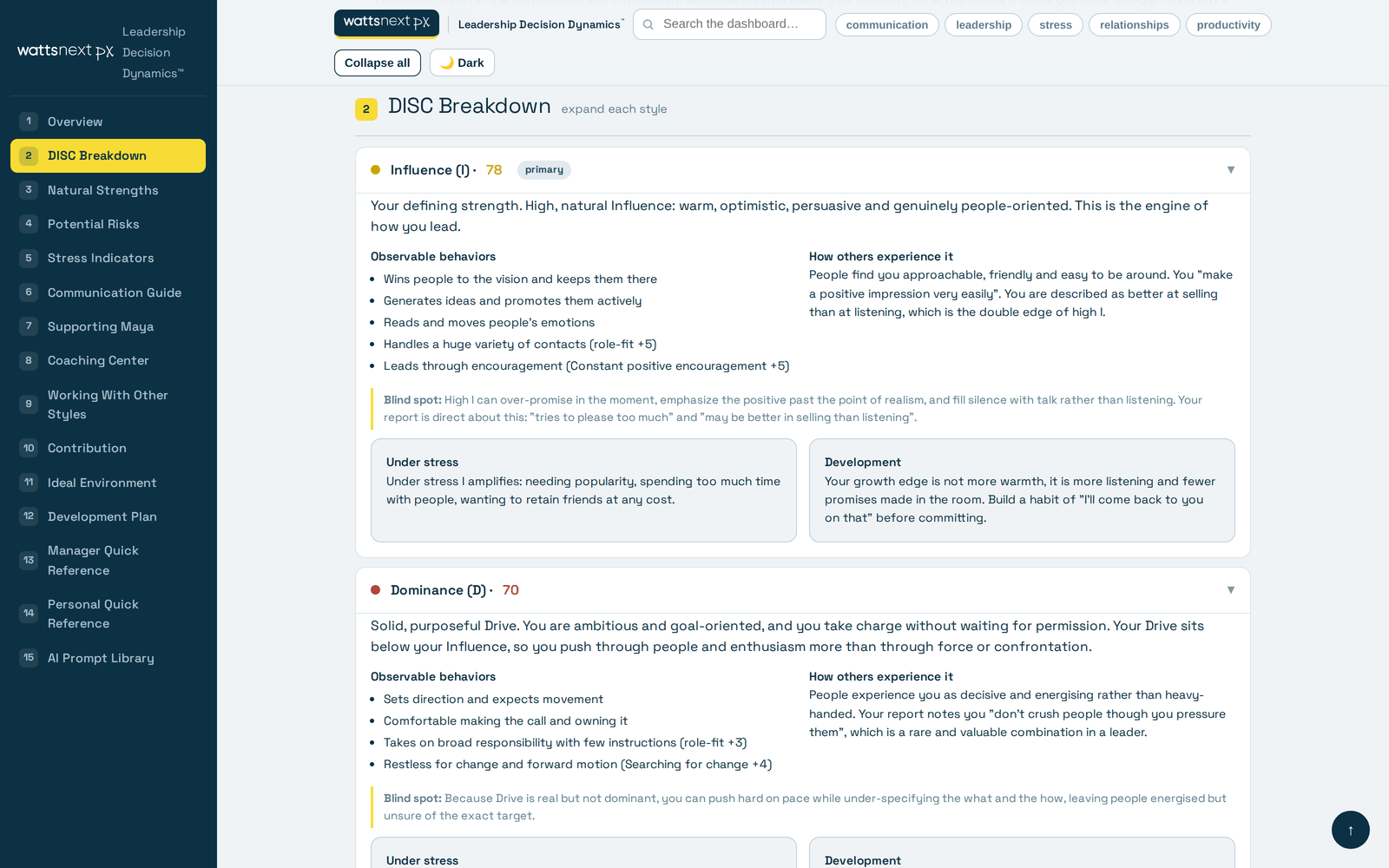
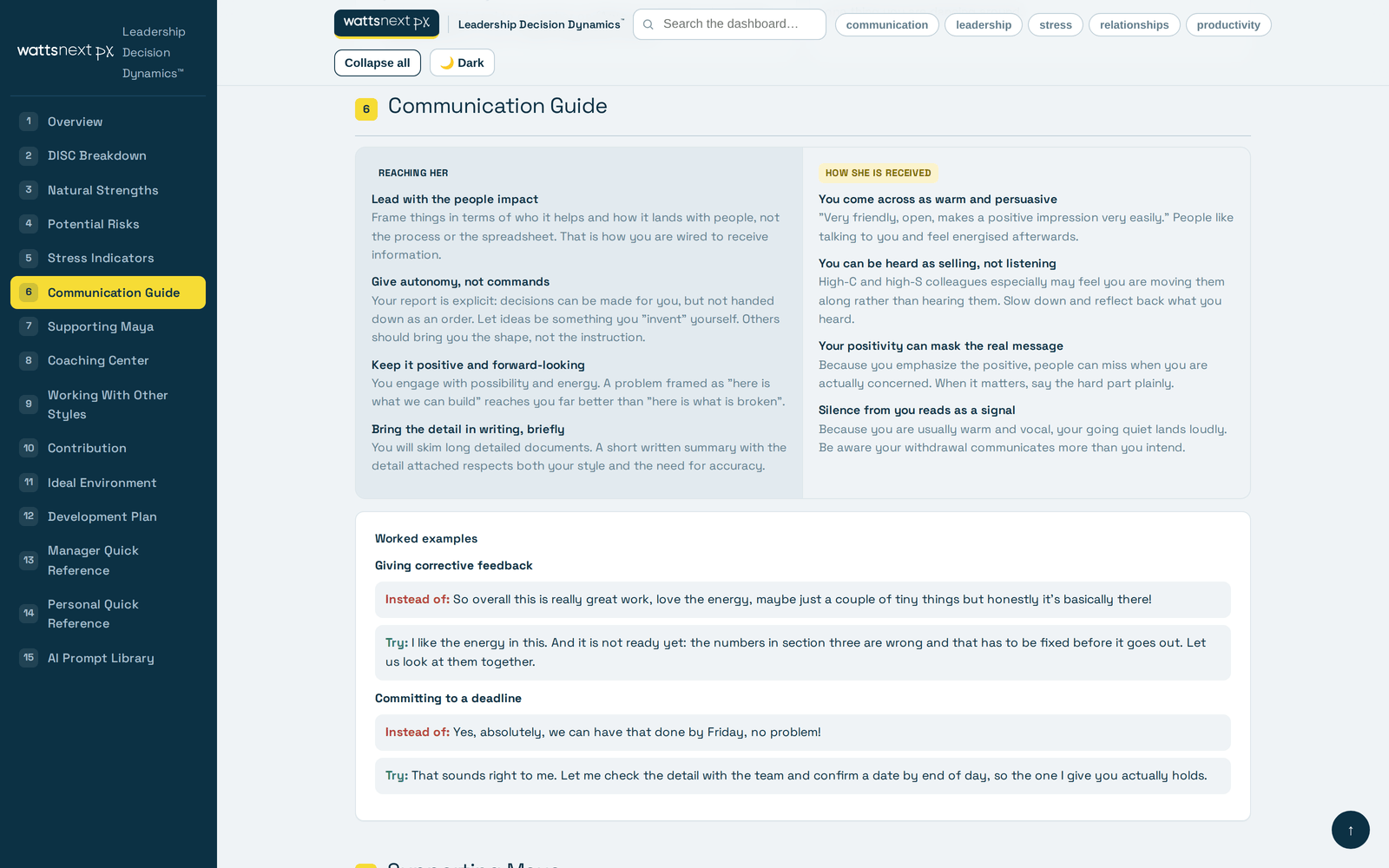
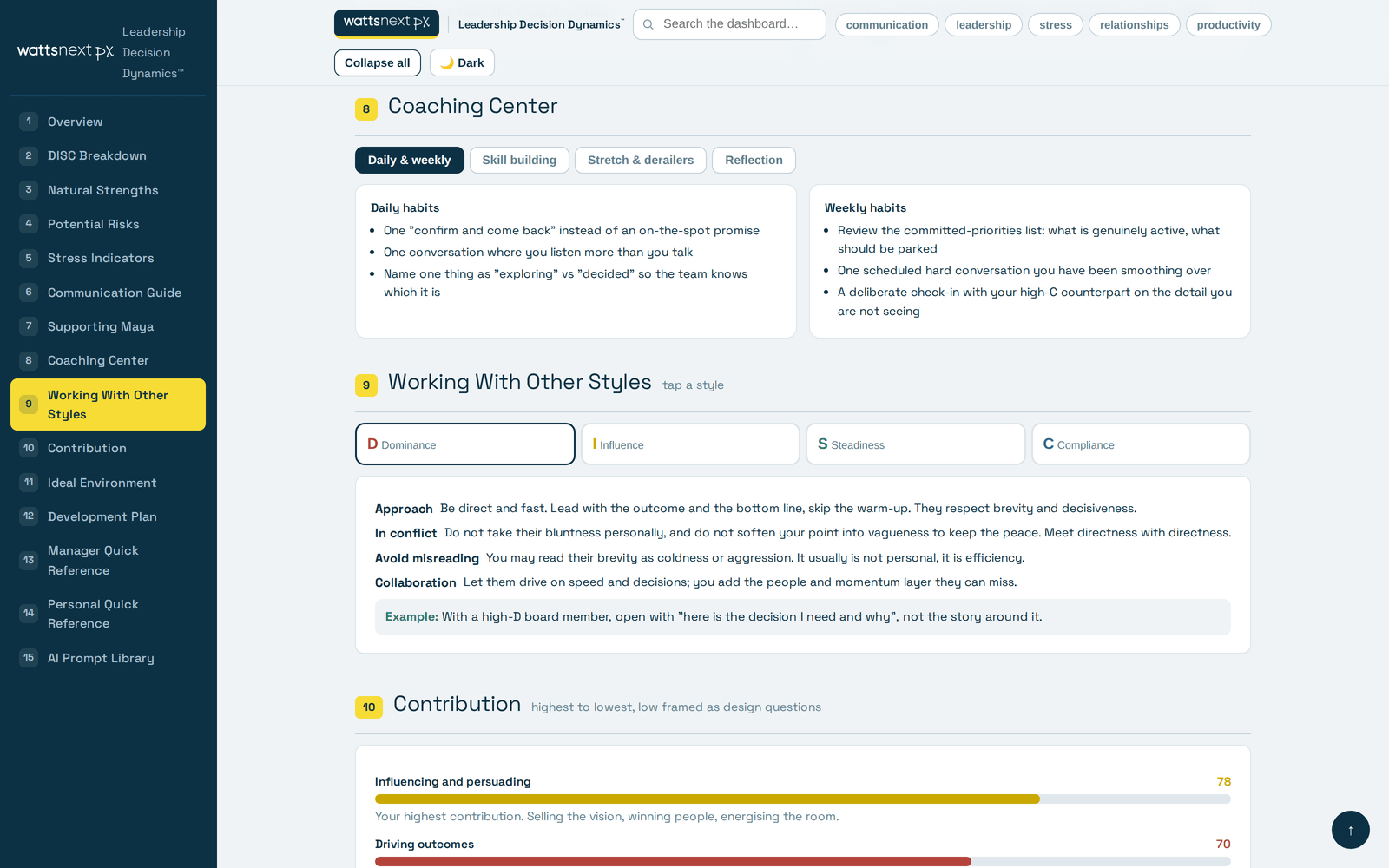
Leadership Decision Dynamics™ reveals how your leaders' collective behavioral makeup influences the way they assess risk, identify opportunities, challenge assumptions and turn decisions into action.
For leadership teams, executive teams and boards making decisions that shape the future of the business.
Every leadership team has a natural behavioral shape. Some teams move quickly and act decisively. Some interrogate every risk. Some generate possibilities and bring others with them. Others protect stability, cohesion and execution.
Each tendency can be valuable. The risk appears when one perspective dominates, or another does not arise naturally in the room.
Do any of these decision-making patterns feel familiar?
“We move quickly, then discover implications we didn't fully consider.”
“We analyze decisions thoroughly, but it takes us too long to commit.”
“Everyone agreed in the meeting, but the decision didn't translate into action.”
“The same person always has to challenge the group's thinking.”
What is the behavioral composition of your leadership team causing you to see clearly, and what might it be causing you to miss?
.webp)
An individual behavioral profile helps a leader understand how they naturally operate, communicate and respond under pressure. But it does not reveal what happens when the leadership team's profiles are considered together.
TEAM BEHAVIORAL MAP
Which behavioral perspectives naturally dominate the room.
Which perspectives may be underrepresented or missing.
How the team is likely to approach risk, opportunity, pace and execution.
Where the group may become less balanced under pressure.
Whether an important perspective depends too heavily on one person.
The profiles give us evidence. The collective interpretation is the value.
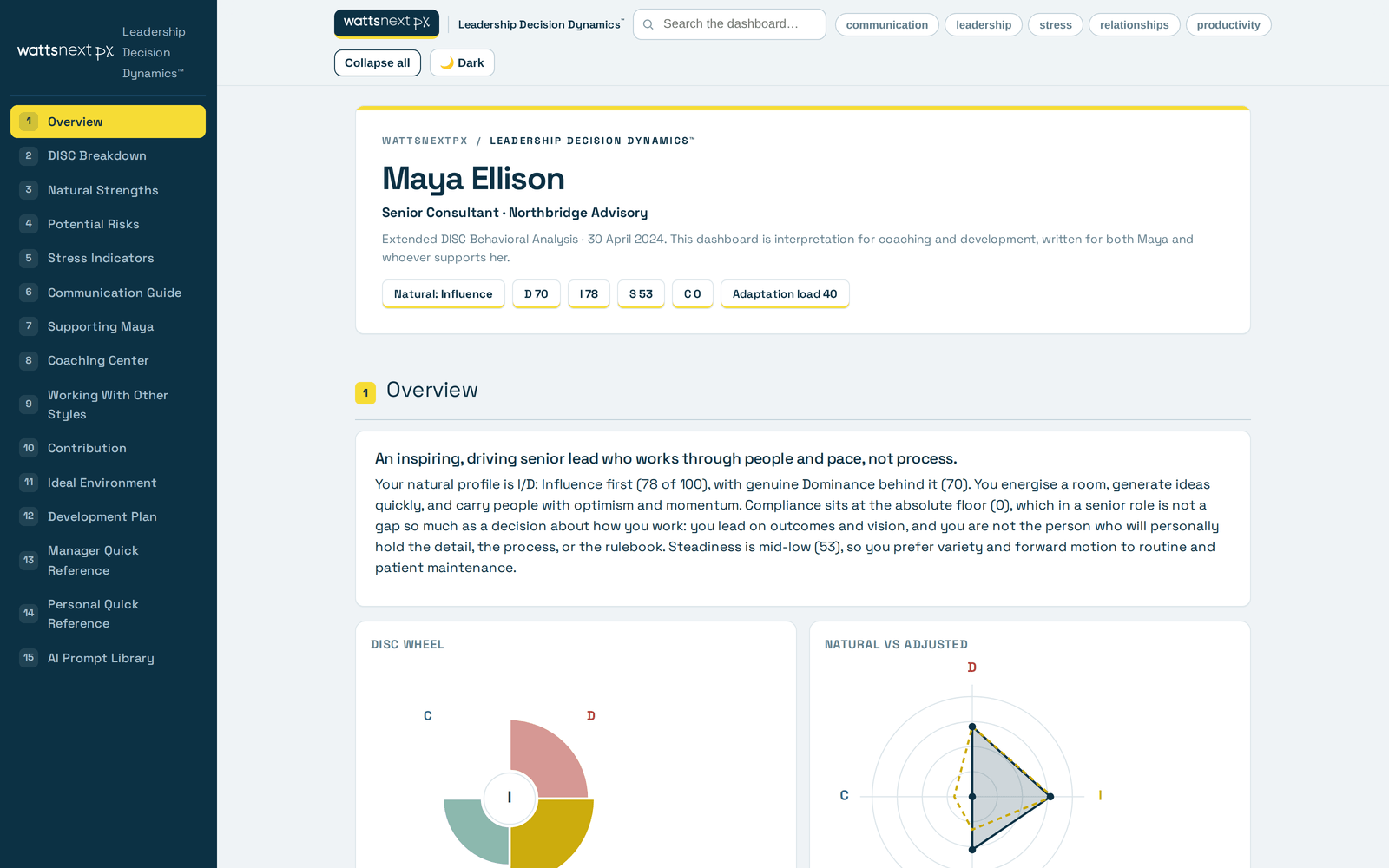
Each leader completes an Extended DISC® assessment to identify their natural behavioral style, strengths and tendencies under pressure.
We map the behavioral composition of the leadership team to identify dominant, underrepresented and dependent perspectives.
We interpret the findings in the context of the company's priorities, pressures and most important decisions.
The team works through what the collective picture means and where it needs to introduce greater challenge, balance or discipline.
The team leaves with specific questions, perspectives and practices to build into future leadership discussions and decisions.
Challenge, decisiveness, pace and a focus on results.
Possibility, energy, persuasion and future-focused thinking.
Listening, consistency, cohesion and dependable implementation.
Critical analysis, risk awareness, accuracy and high standards.
Leadership Decision Dynamics™ reveals where your team may need to make its decision-making more deliberate, and what to build into the process.
Visible decision-making blind spots
See which perspectives may be overlooked when the team assesses risk, opportunity, pace, people and execution.
More deliberate challenge
Know when the team needs to slow down, widen the conversation or introduce a perspective that may not arise naturally.
Better use of each leader
Understand which perspective each leader naturally contributes and avoid depending on one person to provide the team's only counterbalance.
Practical leadership guardrails
Build the missing questions and perspectives into the way important decisions are discussed and made.
Included for every leader
Each leader receives access to an AI Behavioral Insights Dashboard, making their individual profile easier to explore and apply after the advisory session.
The dashboard makes the insight accessible. The advisory work makes it commercially meaningful.


Leadership Decision Dynamics™ is particularly valuable when:
A founder is building or reshaping the senior leadership team.
A significant new executive is joining the business.
The company is preparing for growth, investment, succession or an eventual exit.
The leadership team is making decisions with increasing complexity, risk or financial consequence.
The same leadership tensions or decision-making patterns keep recurring.
This work is designed for leadership teams, executive teams and boards. It is not a broad employee personality exercise.
Sel Watts has spent 20 years interpreting behavioral profiles in the context of leadership, roles, teams and business performance.
She combines deep Extended DISC® expertise with an understanding of how leadership behavior affects accountability, risk, execution and growth.
Sel does not simply tell leaders what their individual profiles say. She shows the team what its collective picture means for the way it leads the company.

Is this a team-building workshop?
No. Better working relationships may be one outcome, but the primary purpose is to understand how the team's collective behavioral composition may influence business decisions.
Does a missing style mean the team lacks that capability?
Not necessarily. It means that behavior or perspective may not arise naturally or consistently within the group. The work helps the team decide how to introduce it deliberately when it matters.
We have already completed DISC. Can we still do this?
Yes. To map the team accurately, everyone completes the same Extended DISC® through wattsnextpx, so the profiles are consistent and can be compared like for like. Earlier DISC results can still be useful background, but the collective analysis is built on one shared assessment.
Can this be used when appointing a new executive?
Yes. The profile should never be used as a pass/fail hiring test. Interpreted properly, it can help the company understand how a candidate is likely to approach the role and what perspective they may add to the existing leadership team.
My leadership team is only three people. Are we too small for this?
No. Every team has a collective shape, and a small one can lean heavily on a single perspective without anyone noticing. Sel has run this with as few as two people and with a board of twenty, so size is rarely the question.
If your leadership team is preparing for consequential decisions, growth or change, let's discuss whether Leadership Decision Dynamics™ is the right fit.
Discuss Your Leadership Team →Or start with the free assessment ↓
Free download
Not ready for a conversation? Start with the free Leadership Decision Assessment. Each leader completes the 12 questions separately, then the team compares its answers and discusses where the different perspectives lie.